

RTO廢氣處理設(shè)備:RTO裝置運(yùn)行過程中安全風(fēng)險(xiǎn)及控制措施
一、RTO工作原理
1、 Working principle of RTO
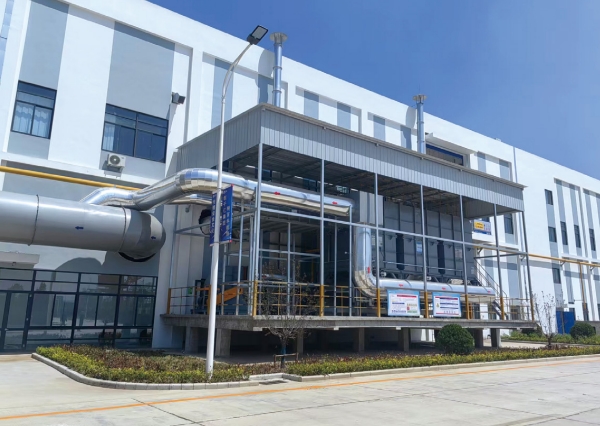
RTO,全稱為蓄熱式熱力焚化爐,是一種高效的有機(jī)廢氣處理設(shè)備。其核心工作原理是將有機(jī)廢氣加熱至 760℃以上,使廢氣中的揮發(fā)性有機(jī)化合物(VOCs)在高溫下氧化分解為無害的二氧化碳(CO)和水(HO),從而實(shí)現(xiàn)廢氣凈化。在氧化過程中,產(chǎn)生的高溫氣體流經(jīng)特制的陶瓷蓄熱體,使陶瓷體吸收熱量并 “蓄熱”,這份 “蓄熱” 會(huì)被用于預(yù)熱后續(xù)進(jìn)入的有機(jī)廢氣,大幅減少廢氣升溫所需的燃料消耗,實(shí)現(xiàn)節(jié)能高效運(yùn)行。
RTO, The full name is a thermal storage incinerator, which is an efficient organic waste gas treatment equipment. Its core working principle is to heat organic waste gas to above 760 ℃, so that volatile organic compounds (VOCs) in the waste gas are oxidized and decomposed into harmless carbon dioxide (CO) and water (HO) at high temperature, thereby achieving waste gas purification. During the oxidation process, the high-temperature gas generated flows through a specially designed ceramic heat storage body, allowing the ceramic body to absorb heat and "store heat". This "heat storage" will be used to preheat the incoming organic waste gas, greatly reducing the fuel consumption required for waste gas heating and achieving energy-saving and efficient operation.
二、RTO 運(yùn)行過程中的安全風(fēng)險(xiǎn)
2、 Safety risks during RTO operation
(一)燃燒器缺少相應(yīng)的聯(lián)鎖保護(hù)
(1) The burner lacks corresponding interlock protection
1.預(yù)吹掃環(huán)節(jié)若未進(jìn)行或時(shí)間不足,爐膛和煙道中剩余的可燃性氣體未被有效吹走或稀釋,被點(diǎn)燃時(shí)存在爆炸危險(xiǎn)。一般預(yù)吹時(shí)間設(shè)定為 15-60 秒,具體時(shí)長(zhǎng)與爐膛結(jié)構(gòu)和吹氣量相關(guān)。2.燃燒狀態(tài)需動(dòng)態(tài)監(jiān)測(cè),火焰探測(cè)器感應(yīng)到熄火信號(hào)后,需在≤0.2 秒內(nèi)反饋給燃燒器,使燃燒器進(jìn)入保護(hù)狀態(tài)并切斷供氣,否則可能引發(fā)事故。3.點(diǎn)火時(shí),要求在氣體引入之前形成點(diǎn)火溫度場(chǎng)。從點(diǎn)火到進(jìn)入保護(hù)狀態(tài)的時(shí)間要適當(dāng),通常燃燒器在氣體打開后 2-3 秒內(nèi)判斷火焰探測(cè)器信號(hào),未著火則進(jìn)入保護(hù)狀態(tài),時(shí)間過短或過長(zhǎng)都存在風(fēng)險(xiǎn)。4.燃料壓力需在一定范圍內(nèi)波動(dòng),以保證火焰穩(wěn)定。通過氣體壓力開關(guān)感測(cè)壓力信號(hào),控制燃燒器工作。當(dāng)風(fēng)機(jī)故障導(dǎo)致空氣中斷或不足時(shí),需立即切斷氣體,避免爆燃或閃回風(fēng)扇。5.氣體泄漏可能導(dǎo)致人員中毒和爆炸事故。需保證管道密封并定期檢查,工作現(xiàn)場(chǎng)要通風(fēng)良好,安裝固定式可燃、有毒氣體監(jiān)測(cè)報(bào)警儀并與機(jī)械通風(fēng)聯(lián)鎖,禁止使用明火和非防爆電氣部件。6.燃燒器工作中突然斷電時(shí),氣體控制電磁閥必須在≤5s 內(nèi)自動(dòng)關(guān)閉并切斷氣體供應(yīng),確保設(shè)備安全。
If the pre blowing process is not carried out or the time is insufficient, the remaining combustible gases in the furnace and flue are not effectively blown away or diluted, and there is a risk of explosion when ignited. The general pre blowing time is set at 15-60 seconds, and the specific duration depends on the furnace structure and blowing volume. 2. The combustion status needs to be dynamically monitored. After the flame detector senses the extinguishing signal, it needs to provide feedback to the burner within ≤ 0.2 seconds to put the burner into a protective state and cut off the gas supply, otherwise it may cause accidents. 3. When igniting, it is required to form an ignition temperature field before introducing gas. The time from ignition to entering the protection state should be appropriate. Usually, the burner judges the flame detector signal within 2-3 seconds after the gas is turned on. If it is not ignited, it enters the protection state. There are risks if the time is too short or too long. 4. The fuel pressure needs to fluctuate within a certain range to ensure flame stability. Sensing pressure signals through gas pressure switches to control the operation of the burner. When the fan malfunctions and causes air interruption or shortage, the gas should be immediately cut off to avoid explosion or fan flashback. 5. Gas leakage may cause poisoning and explosion accidents to personnel. It is necessary to ensure the sealing of pipelines and conduct regular inspections. The work site should be well ventilated, and fixed combustible and toxic gas monitoring and alarm devices should be installed and interlocked with mechanical ventilation. The use of open flames and non explosion proof electrical components is prohibited. When the burner suddenly loses power during operation, the gas control solenoid valve must automatically close and cut off the gas supply within ≤ 5 seconds to ensure equipment safety.
(二)RTO 廢氣組分的安全風(fēng)險(xiǎn)廢氣組分復(fù)雜,部分物質(zhì)相互禁忌可能發(fā)生反應(yīng)。例如,揮發(fā)性可燃液體儲(chǔ)罐排空氣體(主要含 VOCs 和氮?dú)猓缓鯕猓┡c污水處理裝置廢氣(主要含空氣和少量揮發(fā)性氣體)混合后,可能達(dá)到 VOCs 的爆炸范圍和氧含量要求,在一定能量或溫度下發(fā)生爆炸。設(shè)計(jì)時(shí)應(yīng)進(jìn)行 HAZOP 分析,評(píng)估風(fēng)險(xiǎn)并采取措施。
(2) The safety risks of RTO exhaust gas components are complex, and some substances may react with each other due to mutual contraindications. For example, when the gas discharged from a volatile flammable liquid storage tank (mainly containing VOCs and nitrogen, excluding oxygen) is mixed with the waste gas from a sewage treatment plant (mainly containing air and a small amount of volatile gases), it may reach the explosion range and oxygen content requirements of VOCs, and explode at a certain energy or temperature. HAZOP analysis should be conducted during design to assess risks and take measures.
(三)廢氣濃度和壓力不穩(wěn)定的風(fēng)險(xiǎn)廢氣濃度過高達(dá)到爆炸極限時(shí),易被蓄熱體高溫引爆,需嚴(yán)格控制廢氣濃度在爆炸下限(LEL)的 25% 以下。RTO 裝置通常設(shè)置 2 個(gè)在線廢氣濃度檢測(cè)儀,其后一定距離處設(shè)廢氣切斷閥,確保高濃度氣體到達(dá)前切斷閥完全關(guān)閉,即檢測(cè)儀到切斷閥的距離應(yīng)大于氣體在檢測(cè)響應(yīng)時(shí)間和閥門關(guān)閉時(shí)間總和內(nèi)流經(jīng)的管道長(zhǎng)度。同時(shí),系統(tǒng)設(shè)置冷旁通、熱旁通。冷旁通與濃度檢測(cè)儀、廢氣導(dǎo)入閥、應(yīng)急排空閥連鎖,濃度超 25% LEL 時(shí),導(dǎo)入閥關(guān)閉,應(yīng)急排空閥開啟,廢氣經(jīng)冷旁通處理達(dá)標(biāo)后排放;熱旁通與新風(fēng)閥、溫度儀、壓力計(jì)連鎖,爐內(nèi)溫度、壓力異常時(shí),新風(fēng)閥開啟稀釋降溫降壓,熱旁通閥開啟使部分高溫廢氣經(jīng)處理后排至煙囪。
(3) The risk of unstable exhaust gas concentration and pressure is that when the exhaust gas concentration is too high and reaches the explosion limit, it is easy to be ignited by the high temperature of the heat storage body. It is necessary to strictly control the exhaust gas concentration below 25% of the lower explosive limit (LEL). RTO devices are usually equipped with two online exhaust gas concentration detectors, followed by an exhaust gas cut-off valve at a certain distance to ensure that the cut-off valve is completely closed before high concentration gases arrive. That is, the distance from the detector to the cut-off valve should be greater than the length of the pipeline through which the gas flows within the sum of the detection response time and valve closure time. At the same time, the system is equipped with cold bypass and hot bypass. The cold bypass is interlocked with the concentration detector, exhaust gas inlet valve, and emergency vent valve. When the concentration exceeds 25% LEL, the inlet valve closes and the emergency vent valve opens. The exhaust gas is discharged after being treated by the cold bypass to meet the standard; The hot bypass is interlocked with the fresh air valve, temperature gauge, and pressure gauge. When the temperature and pressure inside the furnace are abnormal, the fresh air valve opens to dilute, cool, and reduce the pressure. The hot bypass valve opens to allow some high-temperature exhaust gas to be treated and discharged to the chimney.
(四)廢氣中高沸點(diǎn)組分的風(fēng)險(xiǎn)高沸點(diǎn)組分易在輸送管道中冷凝,進(jìn)入 RTO 爐后遇高溫氣化,可能使氣相組分濃度突增到爆炸極限,引發(fā)爆炸。因此,在廢氣進(jìn)入 RTO 前,需采取有效措施防止管道及 RTO 爐下室體中的冷凝和沉積。
(4) The risk of high boiling point components in exhaust gas is that high boiling point components are prone to condensation in the transport pipeline, and after entering the RTO furnace, they may undergo high-temperature gasification, which may cause the concentration of gas-phase components to suddenly increase to the explosive limit and trigger an explosion. Therefore, effective measures should be taken to prevent condensation and deposition in the pipeline and the lower chamber of the RTO before the exhaust gas enters the RTO.
(五)高濃度有機(jī)廢氣形成爆炸性氣體環(huán)境的風(fēng)險(xiǎn)高濃度有機(jī)廢氣通入 RTO 易被引爆,裝置應(yīng)增加邏輯控制,檢測(cè)到高濃度氣體時(shí)觸發(fā)聯(lián)鎖停車:廢氣緊急排放閥打開,切斷閥關(guān)閉,新鮮空氣閥門打開,主風(fēng)機(jī)降低風(fēng)量運(yùn)行,保證爐內(nèi)進(jìn)入較低濃度氣體。
(5) The risk of explosive gas environment formed by high concentration organic waste gas. When high concentration organic waste gas is introduced into RTO, it is easy to explode. The device should add logic control to trigger interlocking shutdown when high concentration gas is detected: the emergency exhaust valve of the waste gas is opened, the cut-off valve is closed, the fresh air valve is opened, and the main fan reduces the air volume to ensure that lower concentration gas enters the furnace.
(六)火災(zāi)爆炸性危險(xiǎn)環(huán)境的風(fēng)險(xiǎn)RTO 處理的廢氣為易燃、易爆有機(jī)廢氣,易形成火災(zāi)爆炸性危險(xiǎn)環(huán)境。處于爆炸危險(xiǎn)區(qū)域的電氣設(shè)備若不具備防爆功能,易引發(fā)事故。因此,RTO 爐現(xiàn)場(chǎng)電氣儀表設(shè)備需按防爆等級(jí)設(shè)計(jì),管道或爐膛內(nèi)設(shè)置泄爆片;爐體設(shè)置短路保護(hù)和接地保護(hù)功能,廢氣管線選材注意防靜電。當(dāng)系統(tǒng)風(fēng)管道為金屬材質(zhì)時(shí),采用光滑內(nèi)壁金屬管,采取可靠防靜電接地措施,風(fēng)管內(nèi)壁禁止涂刷非導(dǎo)電防腐涂層;非金屬材質(zhì)風(fēng)管需增加導(dǎo)靜電設(shè)施。皮帶傳動(dòng)的引風(fēng)機(jī)需裝配防靜電皮帶。
(6) The risk of fire and explosive hazardous environments is that the exhaust gas treated by RTO is flammable and explosive organic waste gas, which can easily form a fire and explosive hazardous environment. Electrical equipment in explosive hazardous areas without explosion-proof function is prone to accidents. Therefore, the electrical and instrumentation equipment on the RTO furnace site needs to be designed according to the explosion-proof level, and explosion-proof plates should be installed in the pipeline or furnace; The furnace body is equipped with short-circuit protection and grounding protection functions, and the selection of exhaust gas pipelines should pay attention to anti-static. When the system air duct is made of metal material, smooth inner wall metal pipes should be used, reliable anti-static grounding measures should be taken, and non-conductive anti-corrosion coatings should not be applied to the inner wall of the air duct; Non metallic air ducts need to be equipped with anti-static facilities. The induced draft fan driven by a belt needs to be equipped with an anti-static belt.
(七)進(jìn)氣管道壓力偏低的風(fēng)險(xiǎn)RTO 進(jìn)氣管道壓力偏低時(shí),因蓄熱體吹掃可能導(dǎo)致高溫?zé)煔饣卮脒M(jìn)氣管道引發(fā)事故。需在進(jìn)氣管道上設(shè)置阻火器,且阻火器必須經(jīng)過安全鑒定。同時(shí),設(shè)置多個(gè)爆破片,其爆破壓力和爆破面積需合適,以有效釋放能量,防止設(shè)備爆炸損壞。
(7) The risk of low pressure in the intake duct is that when the RTO intake duct pressure is low, the blowing of the heat storage body may cause high-temperature flue gas to backflow into the intake duct and cause accidents. A flame arrester must be installed on the intake duct and must undergo safety certification. At the same time, multiple blasting discs should be set up with appropriate blasting pressure and blasting area to effectively release energy and prevent equipment damage from explosion.
(八)異常斷電情況下的風(fēng)險(xiǎn)RTO 異常斷電時(shí),需及時(shí)排空生產(chǎn)系統(tǒng)來氣,否則易造成生產(chǎn)系統(tǒng)事故。爐體應(yīng)設(shè)置 UPS 備用電源和壓縮空氣儲(chǔ)氣罐,保證突然停電時(shí)能實(shí)施緊急排空操作。對(duì)于濃度較高且含低燃點(diǎn)物質(zhì)的應(yīng)急排空管道,嚴(yán)禁與高溫排空管道共用煙囪排放。突然停電時(shí),爐膛高溫?zé)o法快速散去,可能損壞防腐材料等設(shè)備。設(shè)計(jì)應(yīng)急壓縮空氣儲(chǔ)氣罐、UPS 和手自動(dòng)控制的泄爆門,停電后 UPS 和儲(chǔ)氣罐將風(fēng)門打到安全位置,應(yīng)急壓縮空氣進(jìn)入燃燒器管道避免高溫?zé)煔庑孤丁5珘嚎s空氣罐僅能支撐 15-20min,需配置備用電源給壓縮空氣或助燃風(fēng)機(jī)。
(8) Risk in case of abnormal power outage RTO. In case of abnormal power outage, it is necessary to promptly drain the gas from the production system, otherwise it may cause production system accidents. The furnace body should be equipped with UPS backup power supply and compressed air storage tank to ensure emergency evacuation operation in case of sudden power outage. For emergency evacuation pipelines with high concentrations and low ignition point substances, it is strictly prohibited to share chimney emissions with high-temperature evacuation pipelines. When there is a sudden power outage, the high temperature in the furnace cannot dissipate quickly, which may damage equipment such as anti-corrosion materials. Design an emergency compressed air storage tank, UPS, and manually controlled explosion-proof door. After a power outage, the UPS and storage tank will set the air door to a safe position, allowing emergency compressed air to enter the burner pipeline to prevent high-temperature flue gas leakage. But the compressed air tank can only support 15-20 minutes, and a backup power supply needs to be configured for the compressed air or combustion air fan.
(九)RTO 超溫危害爐膛溫度超過 980℃時(shí),內(nèi)部蓄熱陶瓷和陶瓷纖維組塊的使用壽命會(huì)受影響。爐膛內(nèi)設(shè)置 2 支雙支熱電偶,確保溫度控制均勻。溫度監(jiān)測(cè)與燃燒器燃料切斷閥聯(lián)鎖,溫度超一定值時(shí),燃料管路雙電磁閥自動(dòng)關(guān)閉;溫度更高時(shí)打開新風(fēng)風(fēng)門降溫,發(fā)生高高報(bào)警時(shí),RTO 焚燒爐自動(dòng)切斷與生產(chǎn)線的聯(lián)機(jī),工藝廢氣直接進(jìn)入排放系統(tǒng)。
(9) When the temperature of the furnace exceeds 980 ℃ due to RTO overheating, the service life of the internal heat storage ceramic and ceramic fiber modules will be affected. Two double thermocouples are installed in the furnace to ensure uniform temperature control. The temperature monitoring is interlocked with the burner fuel cut-off valve. When the temperature exceeds a certain value, the dual solenoid valves in the fuel pipeline will automatically close; When the temperature is higher, open the fresh air damper to cool down. When a high high alarm occurs, the RTO incinerator automatically cuts off its connection with the production line, and the process exhaust gas directly enters the emission system.
本文由 RTO廢氣處理設(shè)備 友情奉獻(xiàn).更多有關(guān)的知識(shí)請(qǐng)點(diǎn)擊 http://m.9qmv.com/ 真誠的態(tài)度.為您提供為全面的服務(wù).更多有關(guān)的知識(shí)我們將會(huì)陸續(xù)向大家奉獻(xiàn).敬請(qǐng)期待.
This article is a friendly contribution from RTO waste gas treatment equipment For more related knowledge, please click http://m.9qmv.com/ Sincere attitude To provide you with comprehensive services We will gradually contribute more relevant knowledge to everyone Coming soon.
上一篇:一文解析透徹噴砂房的結(jié)構(gòu)組成和工作原理
下一篇:自動(dòng)式拋丸機(jī)快速高效去除金屬件表面的污染物


 魯公網(wǎng)安備 37142502000144號(hào)